A day here
You come in through the BKPJM campus, and the classes are inside the college building for now.
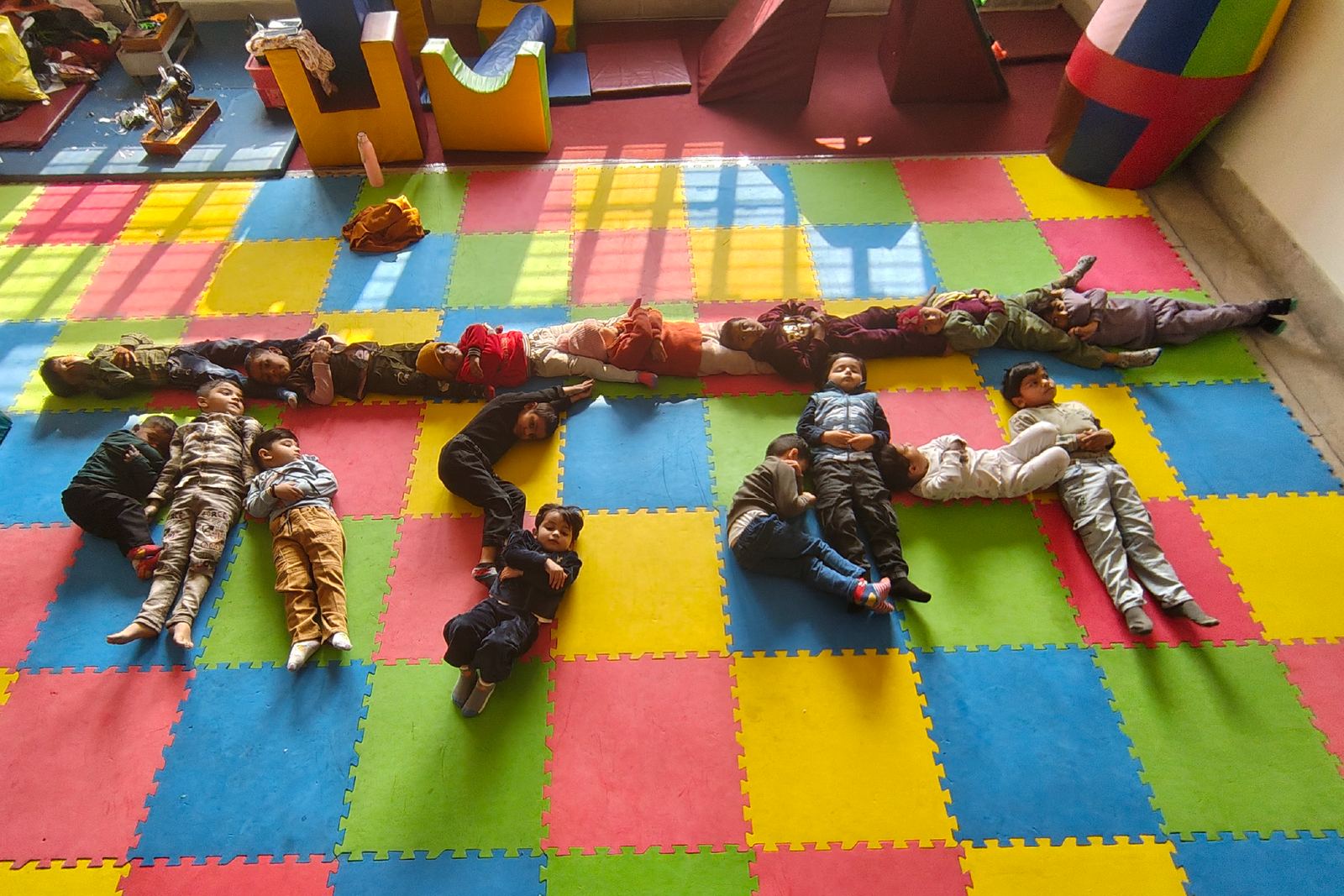
8:30 to 9:00
Welcome
Children start coming in from 8:30 AM, and we officially start by 9:00 AM. In winter, the day starts about an hour later.
About an hour
Physical, first
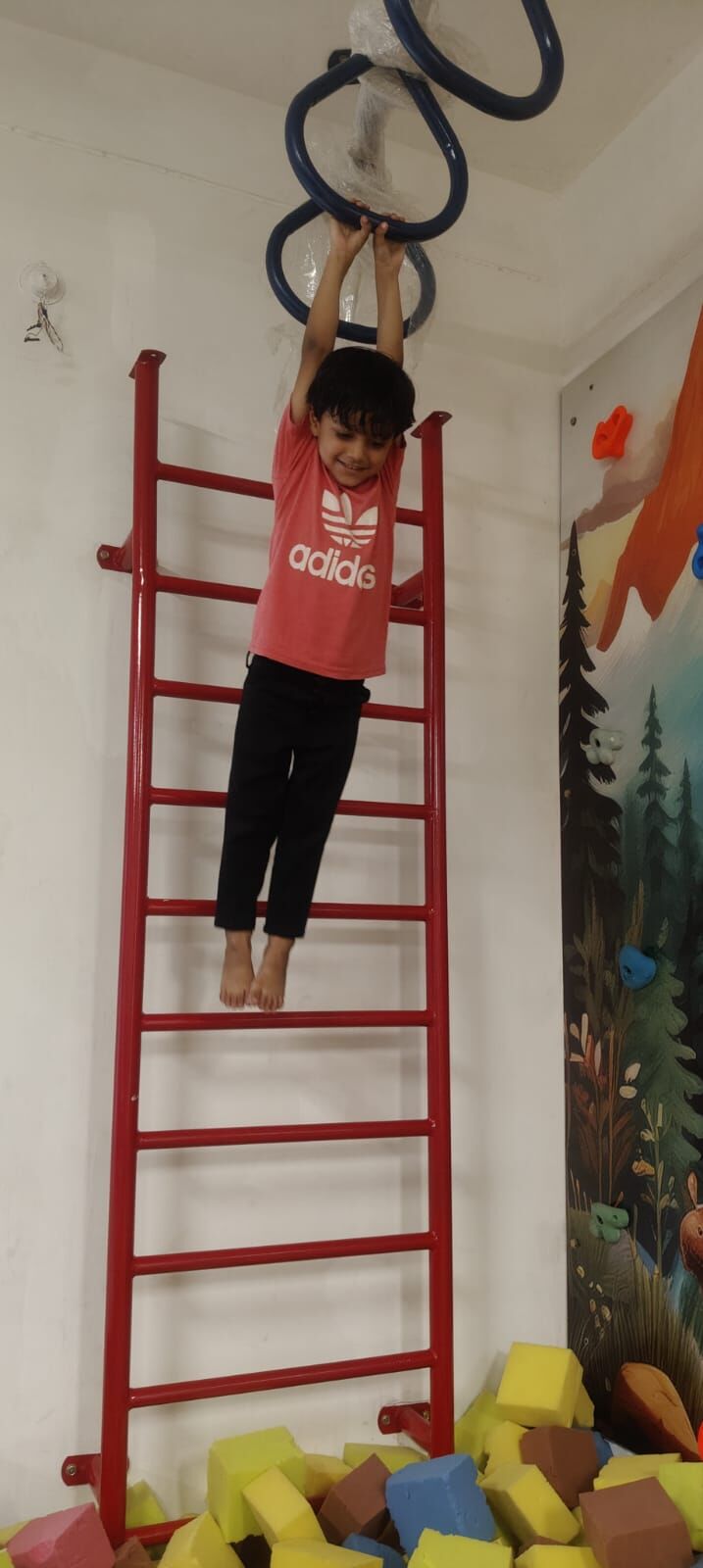
Water is as still as the vessel. Therefore preparing a healthy, active, focused body comes first. Physical rotates through structured play, messy play, risky play and free play. Read more about the four kinds of play.
Risky play is a working term here and we use it on purpose. A child who has never been allowed to judge a height has no way of learning to judge one. The adults make the ground soft and then stay out of the way.
Fifteen minutes or so
A fruit break
Every child brings a fruit from home each day. The facilitators make a fruit salad, and every child gets to eat every kind of fruit.
Energising, bonding, and healthy eating habits.
About an hour
A learning block
Each block carries one skill, worked through a project, with काया, दिमाग and मन all in it at once. Body, mind, heart. Not three subjects in three periods.
Big and small, for instance, is not learned sitting down. It is going outside to look for big and small leaves, helping a friend look, carrying them in, arranging them, answering the facilitator's question about them, cleaning them before the session ends, running and jumping around them, and a song about them. That was the maths lesson.
Lunch
From our own kitchen
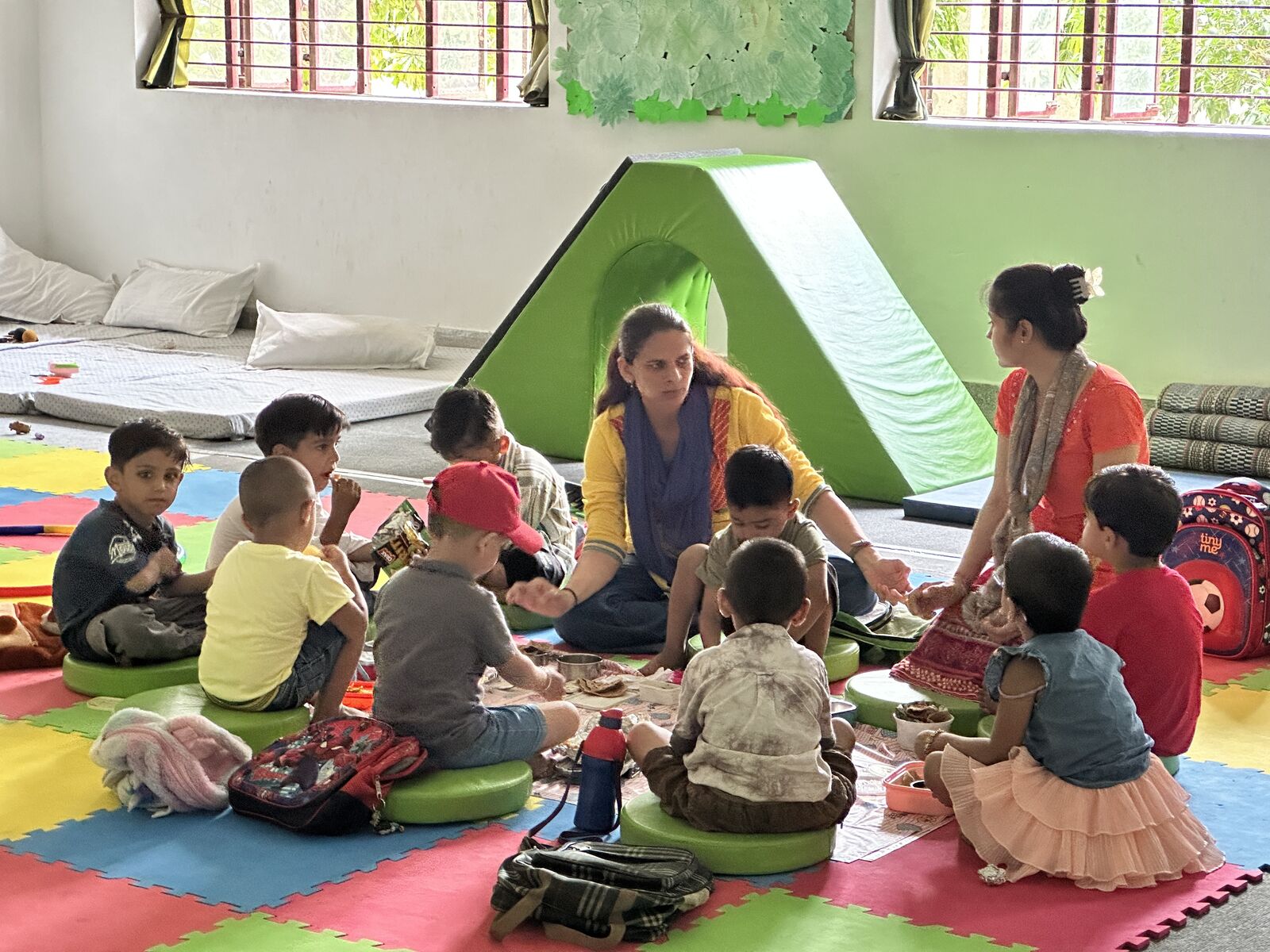
Lunch for every child, cooked from what Samsara, our own farm next door, grows without chemicals. The children eat sitting in a circle, and the lunch circle is one of the three circles that hold the day.
Twelve, or half past one
Then, for Play, the closing circle. For Nursery and Junior KG, one more block first.
Play goes home at twelve. Nursery and Junior KG have a second learning block after lunch and go home at half past one.
Last
The closing circle
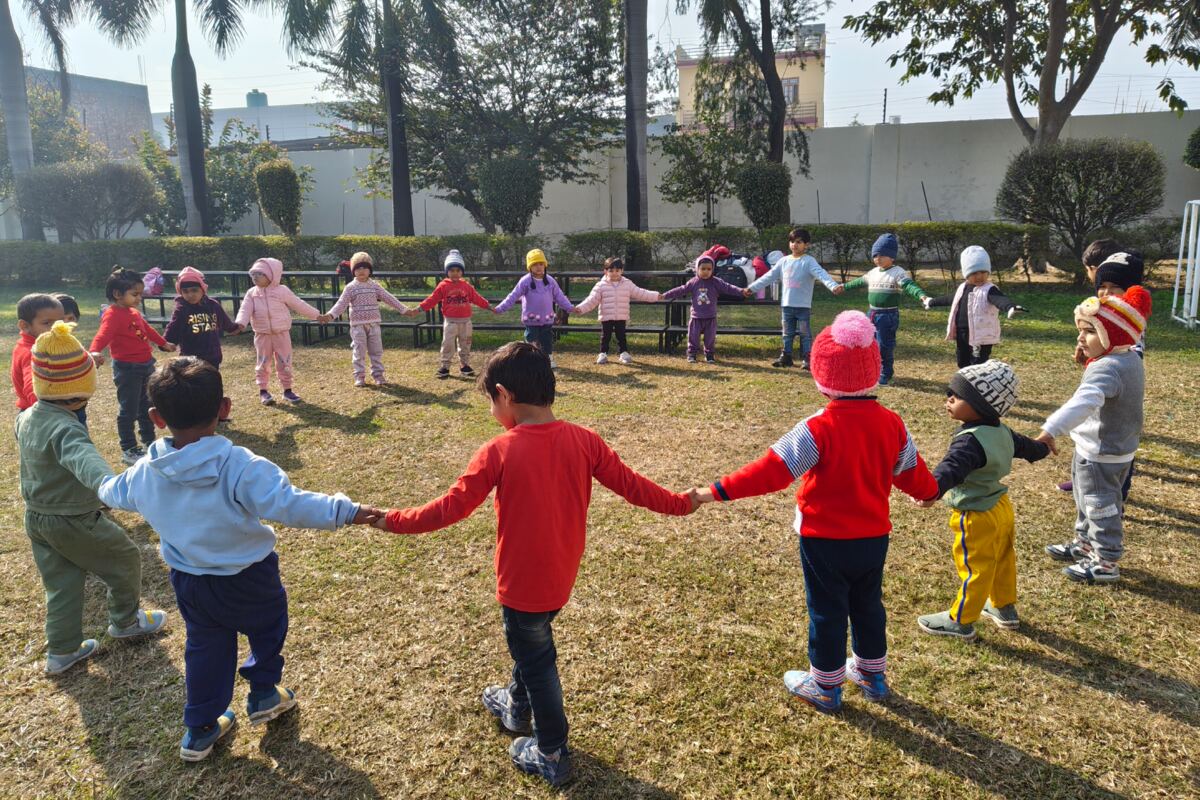
The last thing every child does each day is sit in a circle and talk about it. What excited us. The highlight of the day. What we will do at home. Who we are missing. Who helped whom. It is about feelings and about the self, and it is the part of the day a parent can most easily picture, so come and sit in on one.
It is the last of three. The morning circle, सुबह का गोला, the lunch circle, and this one, छुट्टी का गोला, are the fixed points of the day; the facilitators' notes name the first and the last.
“There is nothing inherently ‘better’ about being at a higher level of development, just as an adolescent is not ‘better’ than a toddler. However, the fact remains that an adolescent is able to do more, because he or she can think in more sophisticated ways than a toddler. Any level of development is okay; the question is whether that level of development is a good fit for the task at hand.”
When a child gets something wrong
Nothing happens. Wrong is an adult idea.
A child here drew an apple and painted it purple, and went on painting it purple for a month. The facilitator asked: what is this? An apple, said the child, and I like it. That was the end of it. Eventually the child painted it red.
When a facilitator does say something, it is an open-ended question, asked out of curiosity. When a child needs more than that, the question is a guided one. Mostly we avoid answering.
Under that sit the things already on record. A child here is never behind. Stages label chapters, never children. There are no examinations, and nobody is ranked.