Notes from school. 15 September 2026
Four kinds of play
Every day at Kadam starts the same way. Not with letters or numbers, but with an hour of Physical: the body first, काया.
Water is as still as the vessel. Therefore preparing a healthy, active, focused body comes first, and the hour rotates through four kinds of play: structured, messy, risky and free.
Structured play
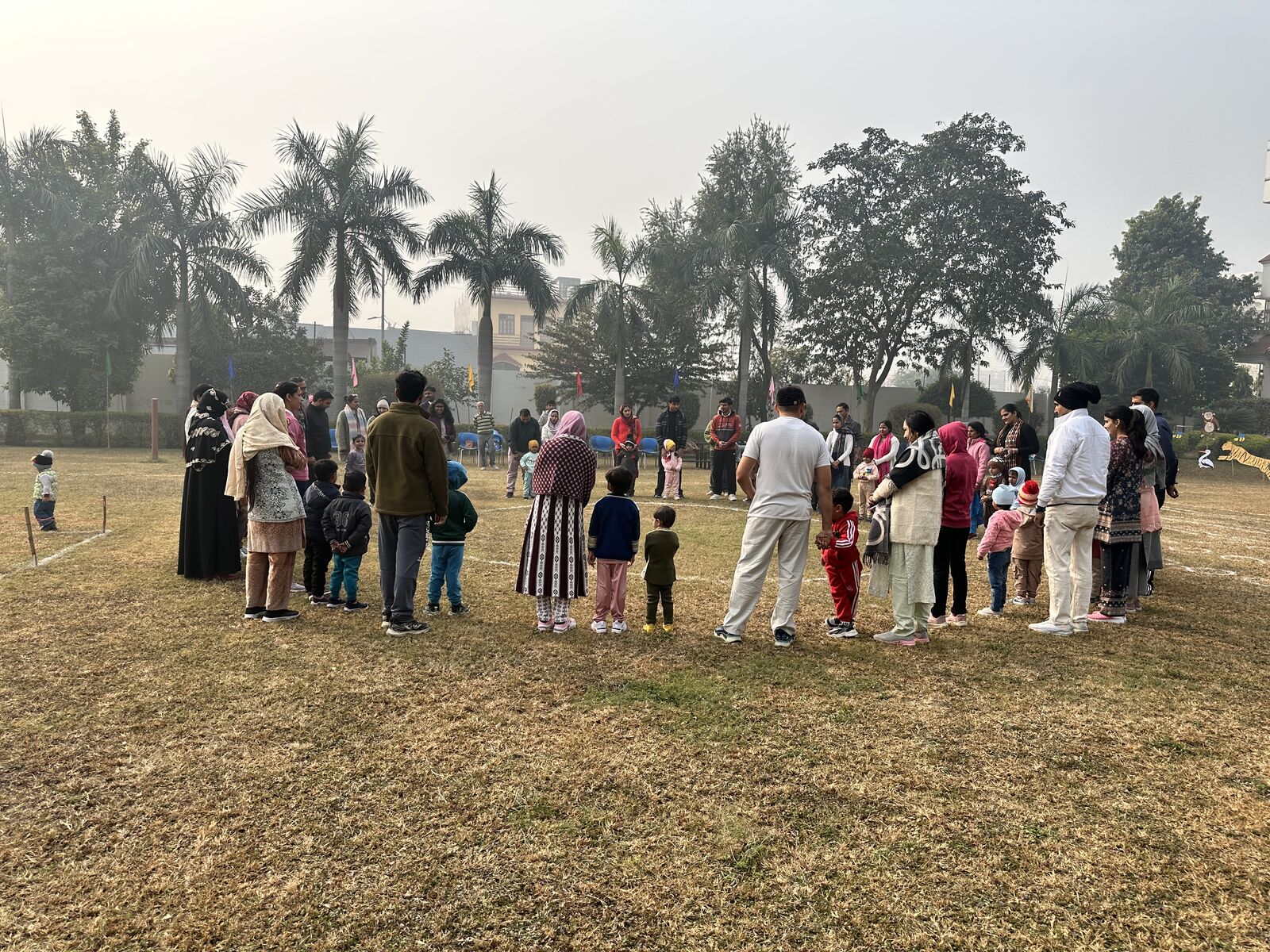
Structured play is set up by an adult, with something in mind. A bucket to throw into. A mat to hop along. The child still does all the moving; the adult has chosen what the moving is for. It is where running, jumping, catching and throwing are practised on purpose.
Both of those are real, and both were written down. Six balls at a bucket four feet away, three tries: one in, then four, then five. And a child who hopped the length of the mat like a rabbit, eight times round.
Messy play
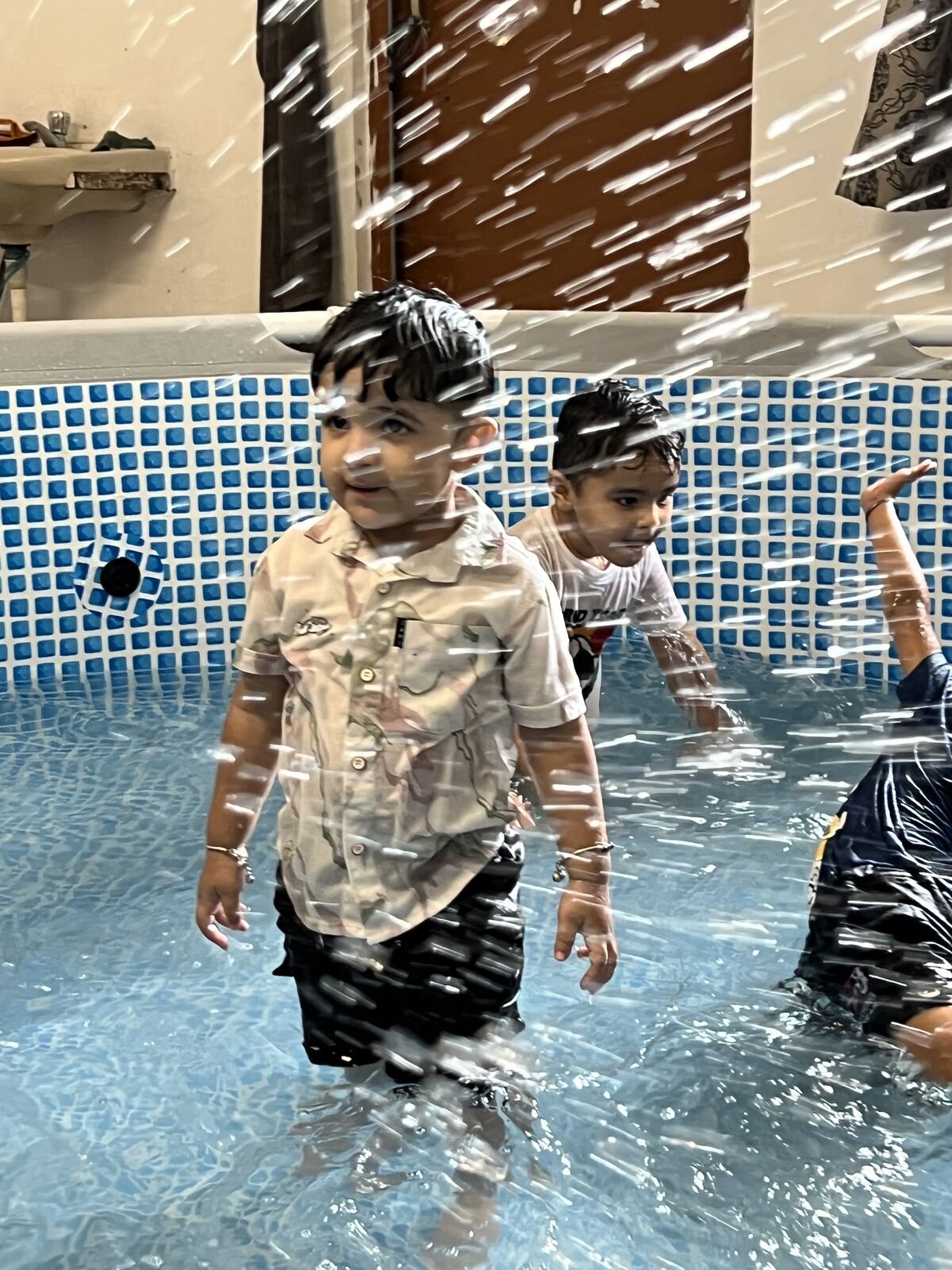
Messy play is sand, water, mud and paint, and it is what it sounds like: hands in something that changes shape. It is how a child finds out what materials do. That wet sand holds and dry sand pours. That paint on a palm makes a different mark from paint on a brush. That mud is heavier than it looks.
At Kadam that has meant painting with hands around the round table, and one August morning in the paddy next door, where every child went in, each in their own way, and came out to the elbows in mud.
Risky play
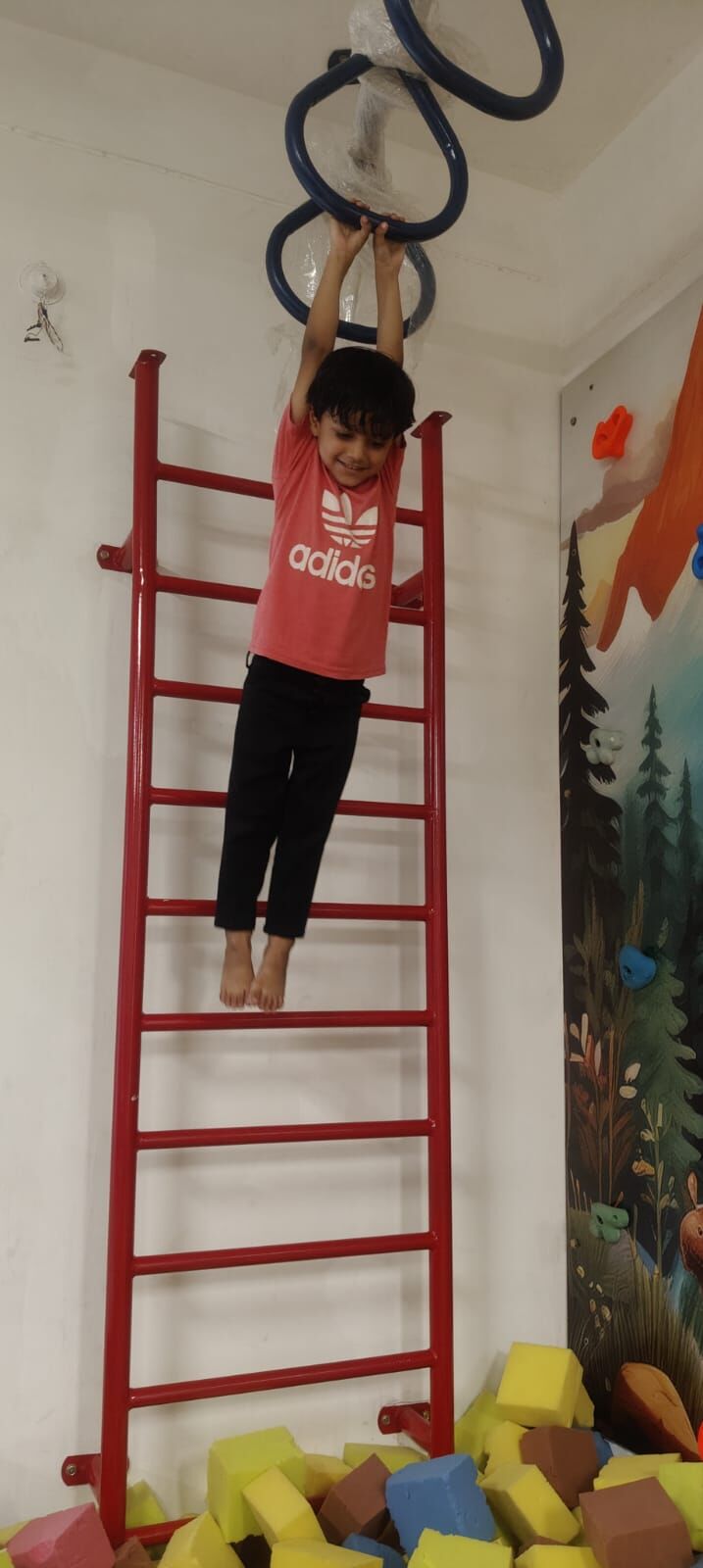
Risky play is the one parents ask about. A ladder. A set of rings near the ceiling, with a pit of foam blocks underneath. Bamboo poles to balance along over the climbing dome.
Risky play is a working term here and we use it on purpose. A child who has never been allowed to judge a height has no way of learning to judge one. The adults make the ground soft, and then stay out of the way.
Children know what they want from it. One facilitator's note records a Nursery child who, every time he gets near the sandpit, asks to be hung from the Ashoka tree.
Free play
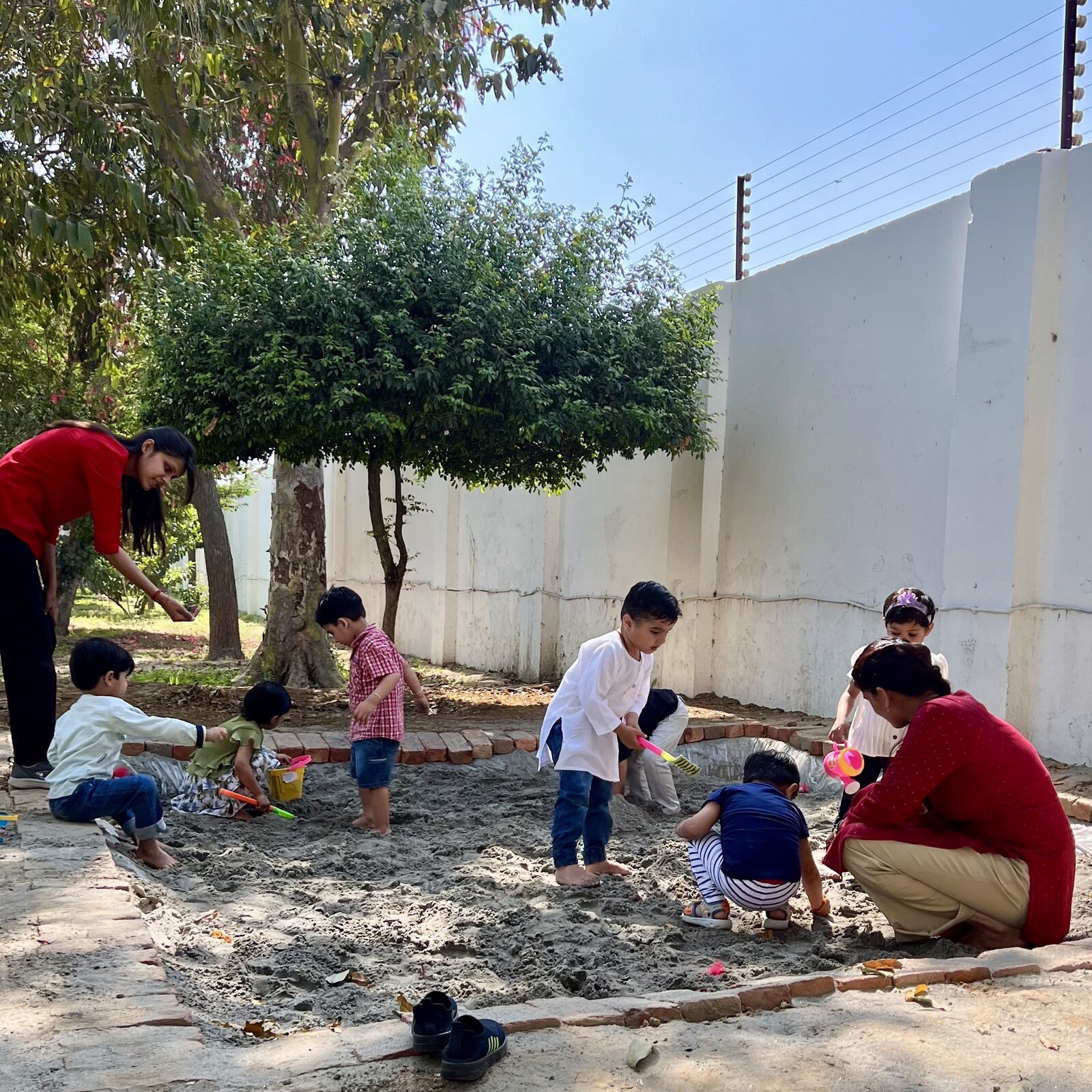
Free play is the part nobody sets up. The child decides what to do, who to do it with, and when to stop.
From outside it can look like nothing much: digging in the sandpit, a game whose rules only its players know, a child who wanders off to watch the others and then comes back. It is where children practise what no adult can hand them: choosing, agreeing, and starting again when a game falls apart.
Why all four, and why first
Each kind asks something different of a child. Structured play builds the skill. Messy play builds the senses. Risky play builds judgement, and courage. Free play builds whatever the child decides to build.
That is why it is an hour, why it rotates, and why it comes before anything else. By the time the learning block begins, the body has had its turn.
Any morning between nine and one, you can come and watch the first hour for yourself, and the rest of the day is here.
The two observation notes are from one child's Individual Progress Report, Nursery, 2025–26, with the name removed.