The land
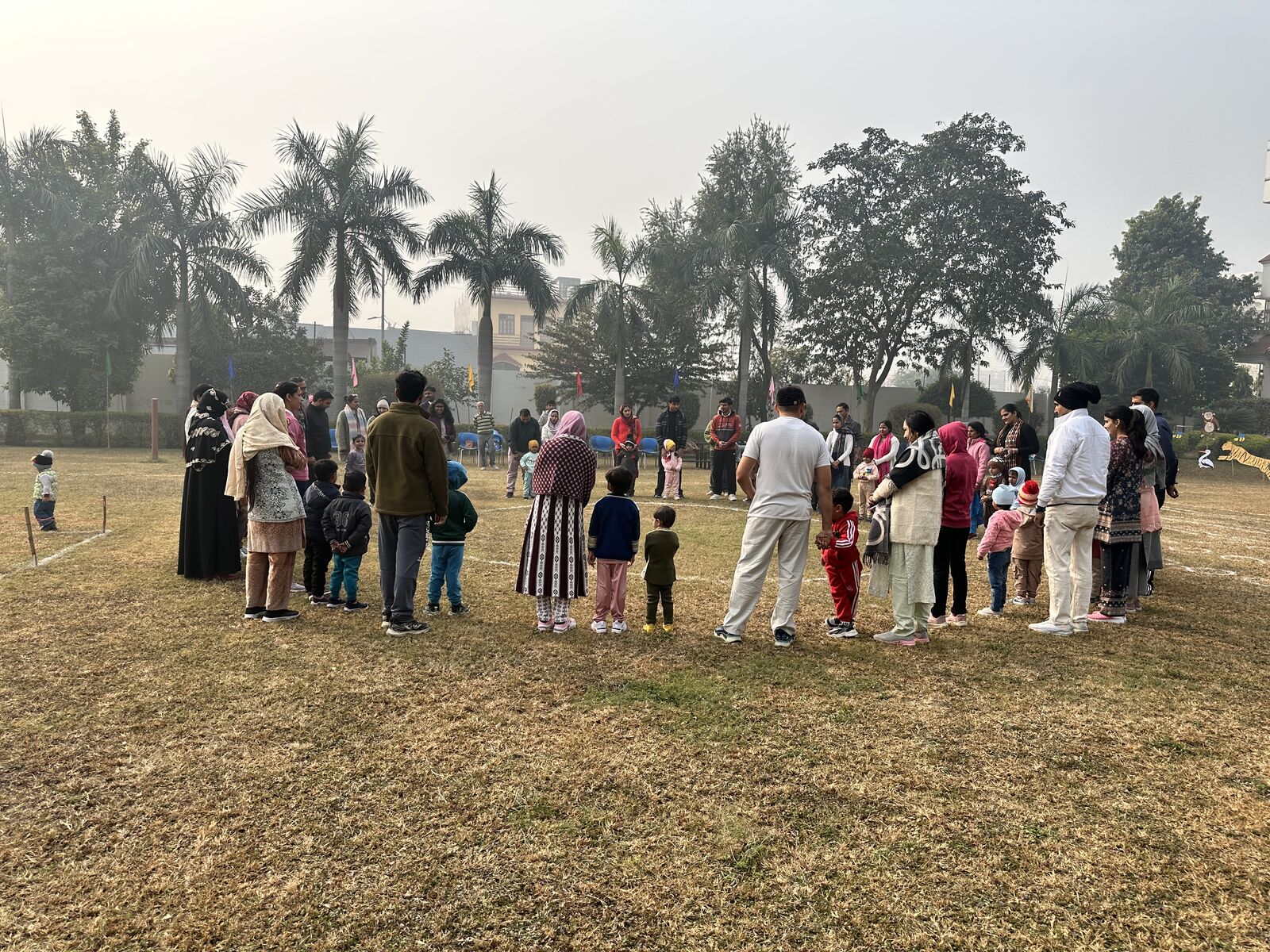
You come in from the Delhi–Saharanpur road, past the college, along an internal road lined with trees. The ground where the school will be built is at the back, away from the highway, where it is quiet and there is less dust.
The classes are inside the college building for now.
1915
Babu Kamta Prasad Jain gives ten acres of land, at no cost, to Digamber Jain College, and Baraut's legacy institution is established.
2004
Babu Kamta Prasad Jain Mahavidyalaya opens on this land, a college run by a registered Society. It has run here ever since.
2025
Kadam opens, with the youngest children, inside the college building.
2027
Kadam moves into its own building, on the ground behind the college.
Four milestones
The farm next door
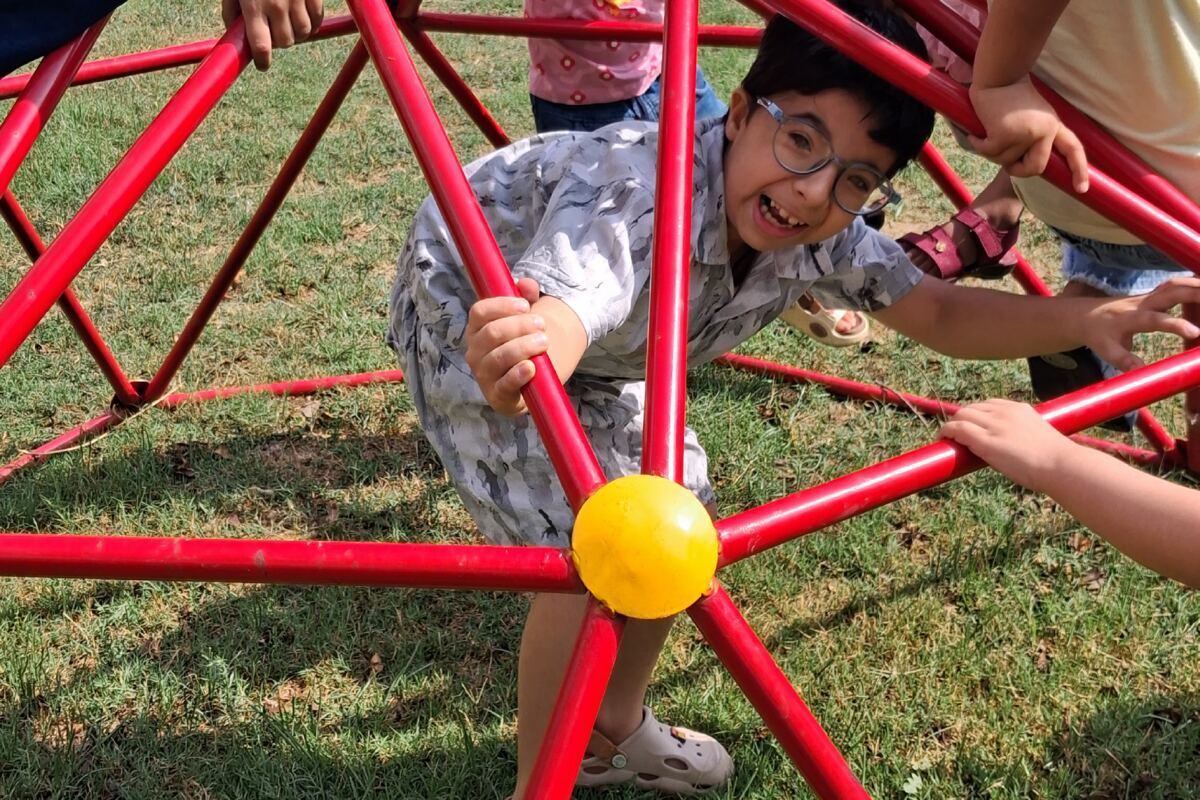
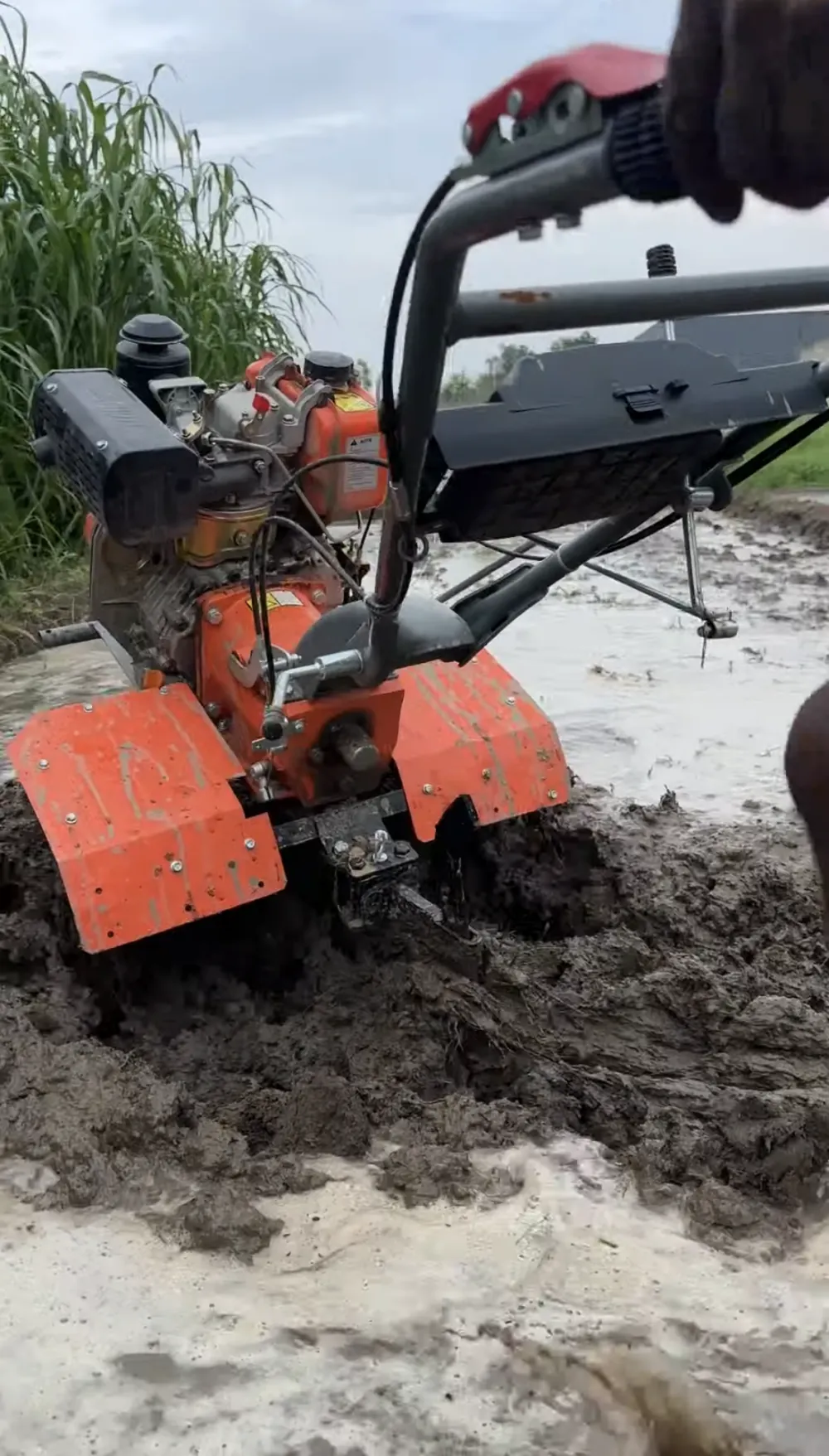
Samsara is our own farm, next door, grown without chemicals. It grows vegetables, and staples: wheat, mustard, rice and sugarcane, among others. The kitchen that feeds the children cooks from it. In August every child was in its paddy field, transplanting rice, each in their own way and to the elbows in mud.
What is growing, waiting for the school
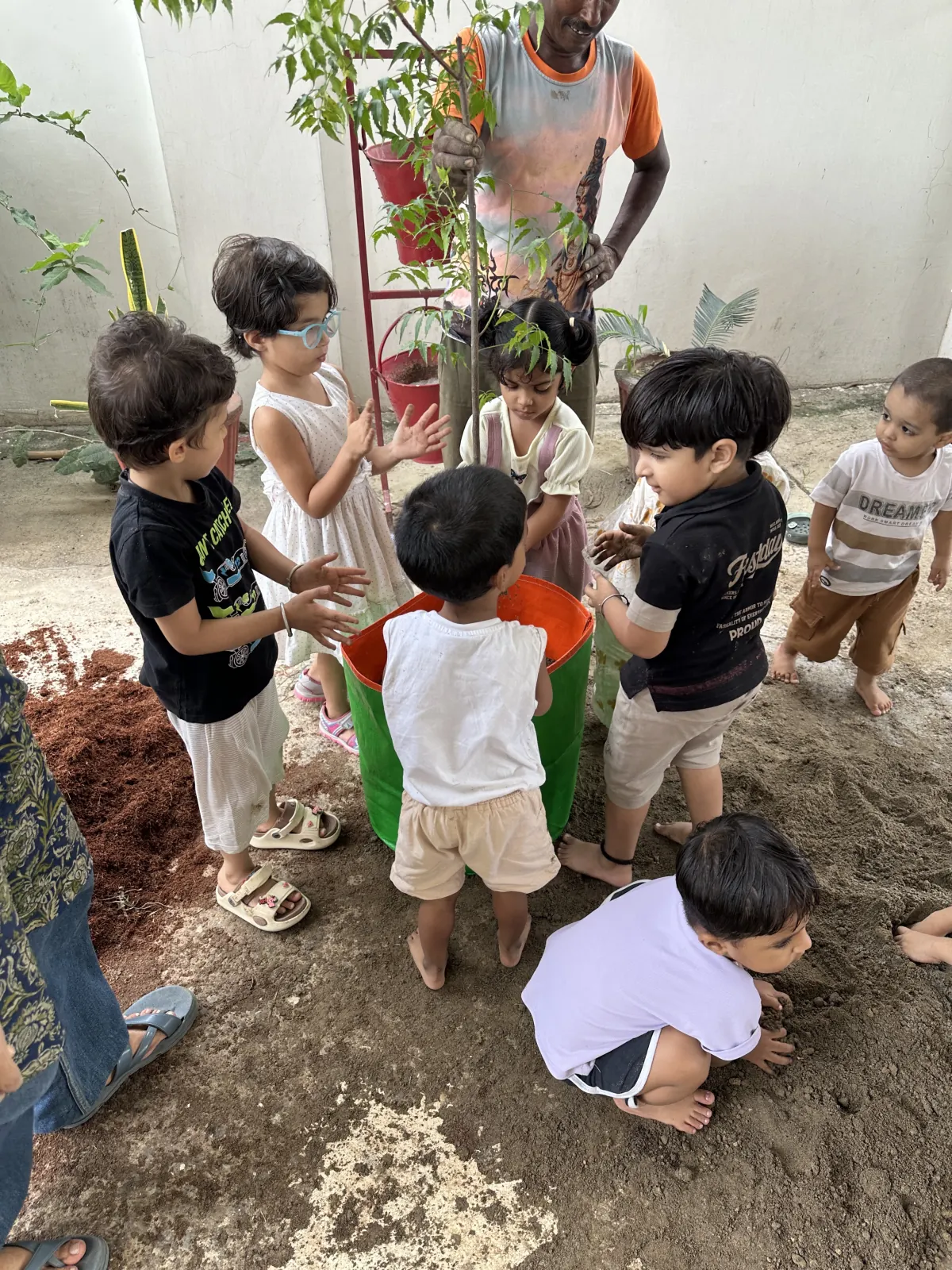
Neem, gudhal and kadamb saplings, one to two years old, are growing in bags. In July 2026 sixty-four more went in, forty-two species: fruit trees and citrus, native and timber trees, flowering ornamentals, spices, foliage plants, and ten bamboo. They are held for a year, fed without chemicals, and planted out when the ground is ready.
The children planted them, and they water them often.
The trees are meant to be places, not decoration: where children and teachers sit, lie down, rest and work. Native or naturalised species first.
How it will be built
The ground behind the college is flat, clear, and sits a little lower than the college. Its low part has no natural outlet and takes the rain from an area more than three times its own size. So water organises the plan, and the kund is why: a stepped tank dug into that low ground, which the monsoon fills.
The buildings will be made from what is here. Baked brick, which is local, and bricks pressed on site from the site's own earth, with mud mortar, lime plaster, and thick walls that hold the cool. Roofs as shallow brick domes. Nothing higher than two floors above the ground. Laurie Baker's ways of building for less: rat-trap bond, filler slabs, brick jaalis.
No air-conditioning. Solar for all of it. Water, food and waste in closed loops, as far as they can be closed. Plumbing and wiring you can get at and fix. Meters and mechanisms left exposed, so a child can see what is what and why, and the building is itself a lab.
The six values are built into the fabric rather than written on a sign: risk you can climb, small working sparks of curiosity, places that ask to be played with, a few things that are deliberately odd, and quiet places to sit in a circle on the ground. Three of them, and three more, are on the Why page.
We call it a school within nature, and we chose that over a school with nature.
There are no pictures of these buildings on this site because they do not exist yet. When something is built, it will be photographed.
Who lives here
Five of us live on the campus: Aditya, Simran, Bismay, Sunita, and Seraj, who works with the college team. When the children have gone home, the people who plan tomorrow are still on the ground where it will happen.
Come and walk it
Come and walk it. Any morning between nine and one, while the children are here; the team is on the campus from half past eight to half past four. WhatsApp 9997900345. Where we are