Notes from school. 14 September 2026
चटर-पटर, 2025–26
Last year, six children in our Junior KG group, all four and over, told more than forty original stories in Hindi. Each one was spoken freely, written down exactly as it was told, and printed opposite the drawing its author made for it. Nothing was corrected. We called the book चटर-पटर, chatter-patter, which is the sound of the room.
This note is about the book: how it came to be, what is in it, and what we learned from making it.
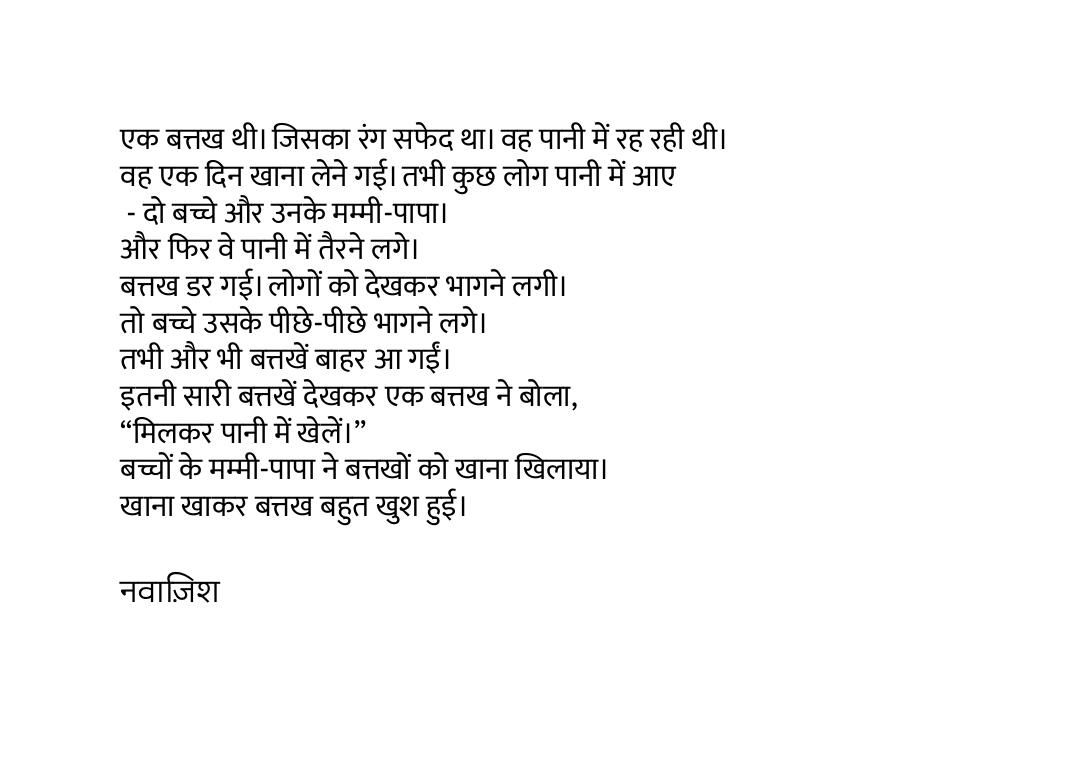
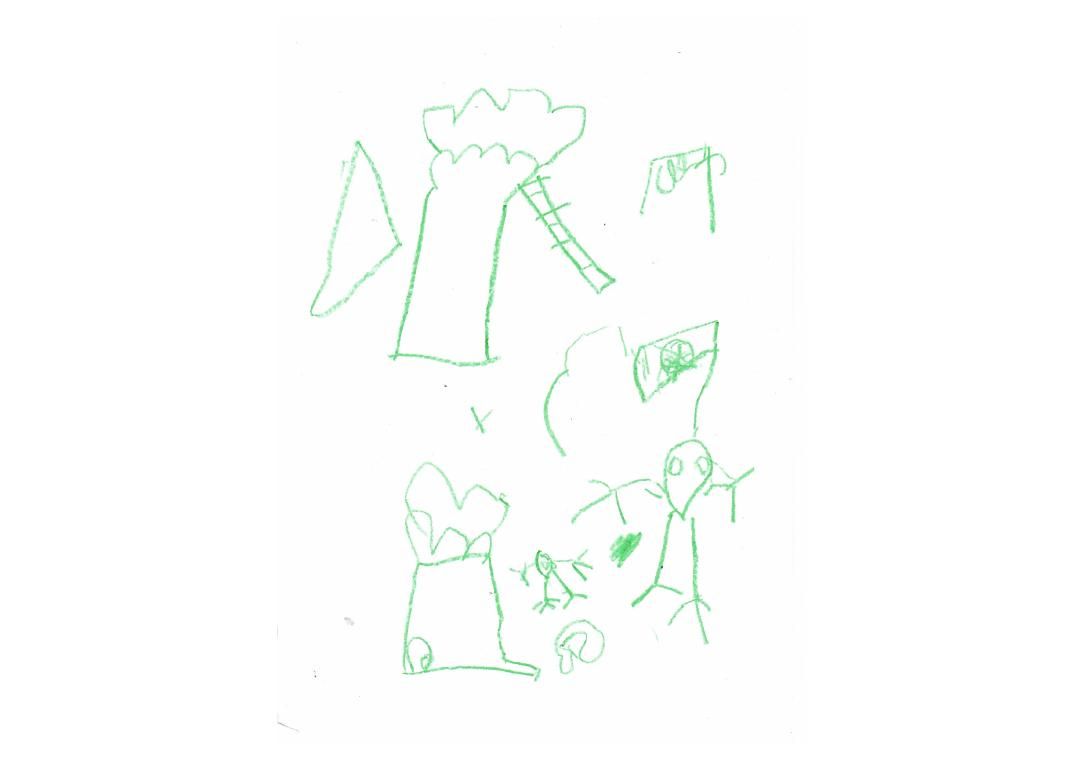
एक बत्तख थी। जिसका रंग सफेद था। वह पानी में रह रही थी।
वह एक दिन खाना लेने गई। तभी कुछ लोग पानी में आए - दो बच्चे और उनके मम्मी-पापा।
और फिर वे पानी में तैरने लगे।
बत्तख डर गई। लोगों को देखकर भागने लगी।
तो बच्चे उसके पीछे-पीछे भागने लगे।
तभी और भी बत्तखें बाहर आ गईं।
इतनी सारी बत्तखें देखकर एक बत्तख ने बोला, “मिलकर पानी में खेलें।”
बच्चों के मम्मी-पापा ने बत्तखों को खाना खिलाया।
खाना खाकर बत्तख बहुत खुश हुई।
नवाज़िश
How it came to be
A four-year-old, given a pressure-free room and somebody paying attention, tells stories all day: about the swimming pool, a jungle, a shopkeeper, a snake, a friend. Everything becomes material. Over the year the stories were written down as they were told, word for word, in the child's own Hindi, the Khadi Boli of home included, and each child drew a picture for theirs. Every one of them was made by the children themselves, in lessons, across the year. Then there were forty, and a book was the obvious thing to do with forty.
The stories in the book are printed in no particular order. They are not arranged to compare one child with another, or to show who is ahead. They are there to celebrate a voice, and the growth in it, and the joy.
Two of them
एक जगह एक शेर था। शेर जंगल में रहता था। शेर ने सोचा, “चलो खाना ढूँढने चलते हैं।” फिर उसे एक सब्जी मिली। वह सब्जी एक भालू बेच रहा था। शेर ने बोला, “भालू भाई, मुझे भूख लगी है, मुझे कुछ दे दो।” भालू ने बोला, “बताओ, क्या चाहिए?” शेर ने बोला, “मुझे खीरा दे दो।” भालू ने खीरा दिया और शेर ने उसे खा लिया। फिर शेर ने पूछा, “कितने पैसे हुए?” भालू बोला, “10 रुपये।” फिर शेर ने पैसे दिए और जंगल में चला गया।
बुरहान, four years old. A lion goes looking for food, finds a bear selling vegetables, asks politely for a cucumber, eats it, asks what he owes, pays ten rupees and goes home. There is a market, a transaction, manners, and a lion who does not eat the bear.
एक पेड़ था
और वह बहुत अच्छा था
और एक बच्चा वहाँ से अपने पापा के साथ जा रहा था
उसने देखा उसने देखा इतना बड़ा पेड़ बहुत अच्छा था फिर तो पेड़ हिलने लगा उसने पूछा, यह पेड़ हल क्यों रहा था।
पापा ने बोला यह हमें हवा दे रहा था फिर उसे पेड़ से बहुत सारी चिड़िया उड़ी जिसे देखकर बच्चों को बहुत अच्छा लगा और फिर वह बच्चा अपने पापा के साथ रोज उसे पेड़ के पास आता था।
रिया, four years old. A child and her father pass a big tree. It moves, and she asks why. It is giving us air, says the father. Birds fly out of it, and after that the child comes back to the tree every day. Notice the repeated “उसने देखा”, which is a child thinking aloud, and which we left in.
What we saw when we read them in order
The book is in no order, but the facilitators' notes are, and reading a child's stories across the year you watch something happen. From one-line stories about familiar things. To several lines, the thoughts still scattered. To connected sequences, with cause and effect. To imagined worlds the child has never physically been in. To stories with dialogue, reasoning and empathy in them: a lion who pays, a child who asks before plucking grapes.
We have watched our children move from describing what they like, their toys, their food, their day, to imagining what a lion or a dog or a cat might think. Nobody set a test to find that out. It is in the book.
What grew alongside, as far as we can see it: fluency and vocabulary, sentences and their grammar, the shape of a story, memory and sequence, cause and effect, imagination, turn-taking, the words for feelings, a rootedness in their own place and language, and the confidence to speak without fear. None of it from memorising sounds.
Why Hindi, and why uncorrected
Hindi, as their first language, becomes the soil in which their thoughts take root. English will come later, but expression must come first. Writing, too, has begun to grow on its own, because the need to write has emerged from within the child, and a child who wants their story in a book wants to write it.
The stories were not edited for correctness because a child's voice deserves to be heard as it is, and because the book is not a test. The repeated word, the missing matra and the Khadi Boli are the child, at four, thinking. How a child learns language here is the longer account of why we work this way.
The name
The introduction to the book ends like this: when you read these pages, you are not just reading stories. You are witnessing children taking their first confident steps, their कदम, into the world of expression.
It is the only place the school's name is explained, and it was written a year before this website.
The book can be seen, and the stories read, at the school.